What hazards will low humidity cause in printing workshops? How to solve the problem?
The optimal humidity range for printing workshops is 30%–50%, and excessively low humidity is unacceptable for printing production. As a porous and hygroscopic material, paper tends to lose moisture easily. The adverse impacts of an overly dry production environment are detailed as follows.
Negative Impacts of Low Humidity
Insufficient ambient moisture will trigger a series of production failures and quality problems:
Low humidity leads to paper shrinkage and deformation, making it incompatible with production lines calibrated for standard paper sizes. Meanwhile, static electricity is generated on paper, causing adhesion between stacked paper layers.
Dry air increases the brittleness of paper materials. Excessive moisture loss results in the shrinkage and fracture of cellulose fibers, damaging the structural stability of paper.
For stacked paper, the edges dry out rapidly while the central parts retain residual moisture. This inconsistency causes irreversible paper curling, which seriously affects printing accuracy.
Low humidity induces substantial dust generation. The suspended dust settles on production equipment, raw printing materials and finished products, contaminating materials and affecting equipment operation.
It accelerates the drying speed of printing ink, leading to uneven ink application during the printing process.
Color distortion and degraded image definition frequently occur, resulting in poor printing quality and unqualified finished products.
In addition, dry indoor air poses threats to the occupational health of printing workers. Inhalation of dust particles reduces oxygen uptake by the human body, causing dry skin and mucous membranes, frequent thirst and physical discomfort, which ultimately reduces work efficiency.
Professional Solution: Workshop misting System
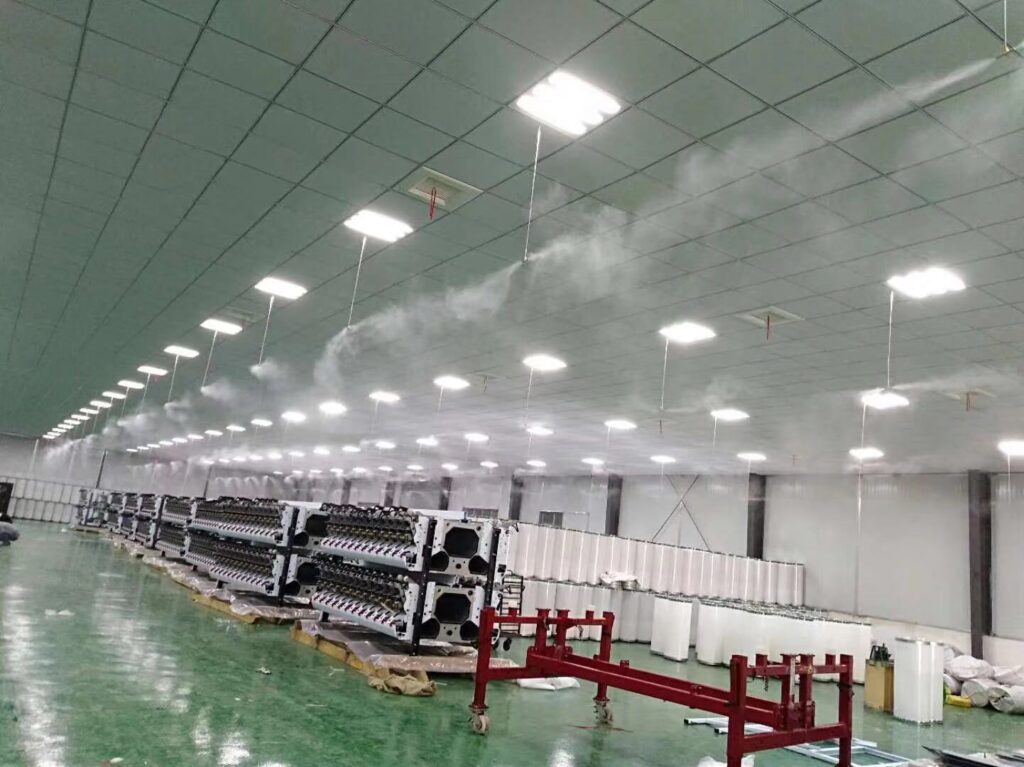
The installation of a professional misting system fundamentally solves the problem of dry air and maintains the optimal humidity level in printing workshops. Ultrasonic humidifiers are widely applied in the printing industry for their superior performance.
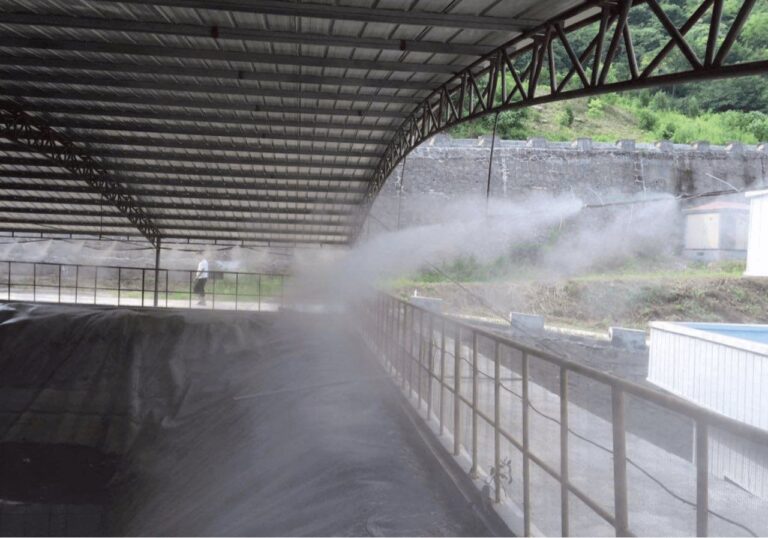
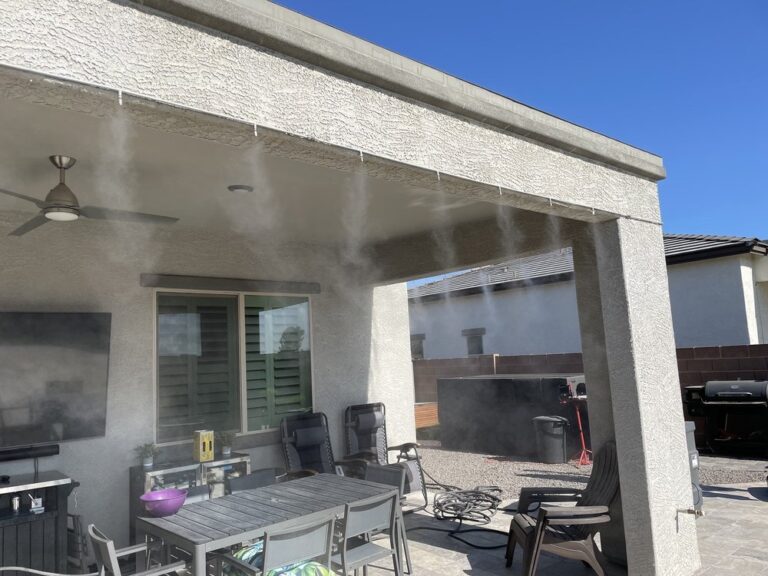
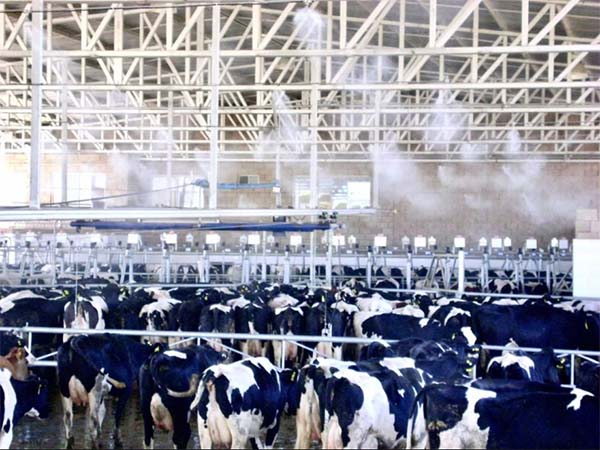
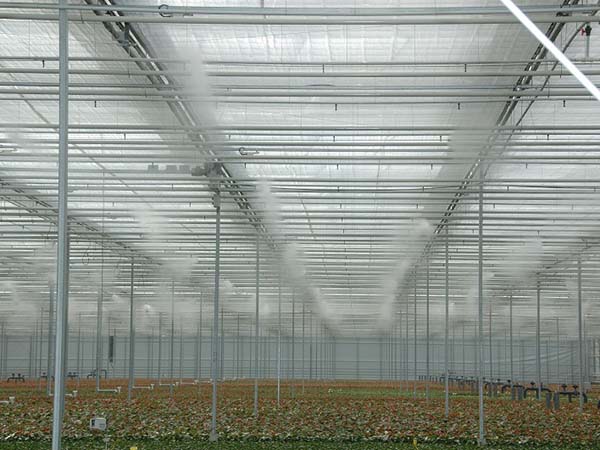
The system atomizes water into ultra-fine fog particles that mix evenly with ambient air to achieve efficient and uniform air humidification. The micron-sized fog particles will not condense on equipment surfaces, nor adhere to paper and printed finished products. It effectively regulates workshop humidity, creating a stable, standard-compliant working environment for both production equipment and operators.